

You finally found a medication that worked. The pounds came off, your favorite clothes fit again, and you started to feel like the best version of yourself. But now a few questions come up: what if I stop taking it? Will I gain all the weight back? Will my body “rebel” because I used medication?
The decision to stop weight loss medication is rarely simple. Whether it’s due to cost, side effects, or simply because you’ve reached your goal, you deserve to know exactly what to expect when this chapter comes to an end.
Let’s break down what really happens when you stop taking medications like semaglutide or tirzepatide.
Why do people decide to stop weight loss medication?
There are many reasons someone might stop taking a weight loss medication and it’s not always a negative thing.
In many cases, stopping is part of a well-structured plan guided by a healthcare provider.
Some common reasons include:
- End of the recommended protocol: the patient has reached a healthy, stable weight.
- Bothersome side effects: such as persistent nausea, fatigue, or digestive issues.
- Shift in focus: the patient chooses to continue with non-medication strategies.
- Financial or access issues: some medications are expensive and may not be sustainable long term.
The way this transition is made — whether gradual or sudden — also plays a big role in how the body responds. That’s why any decision to stop should always be made with medical guidance.
Possible effects after stopping the medication
Stopping semaglutide or tirzepatide doesn’t mean going “back to square one.” But the body can react — especially if the medication has been used for a long time. Here are some of the main effects reported by people who stop treatment.
Weight gain (rebound)
This is, without a doubt, the biggest fear. And yes, rebound weight gain can happen, especially if the medication was playing a strong role in controlling appetite and satiety.
But not all weight gain after stopping means “gaining it all back.” Sometimes, what actually happens is:
- Increased water retention
- Hormonal fluctuations
- Return of old habits that were under control during treatment
The good news? With attention and strategy, it’s absolutely possible to maintain your results.
Physical and metabolic effects
Beyond weight, other changes may show up:
- Increased appetite, especially cravings for carbs or sweets
- Lower satiety after meals
- Fatigue or low energy
- Digestive changes, such as constipation or reflux
- In diabetic patients, higher blood sugar levels
These effects often appear in the first few weeks and tend to stabilize over time — especially with proper professional support.
Emotional and psychological challenges
This part doesn’t get talked about enough, but it matters.
Stopping the medication may lead to:
- Anxiety about possible body changes
- Frustration from noticing small weight fluctuations
- Fear of “going back to where you started”
These feelings are valid and very common. Having psychological support and a strong support system can make a big difference during this transition.
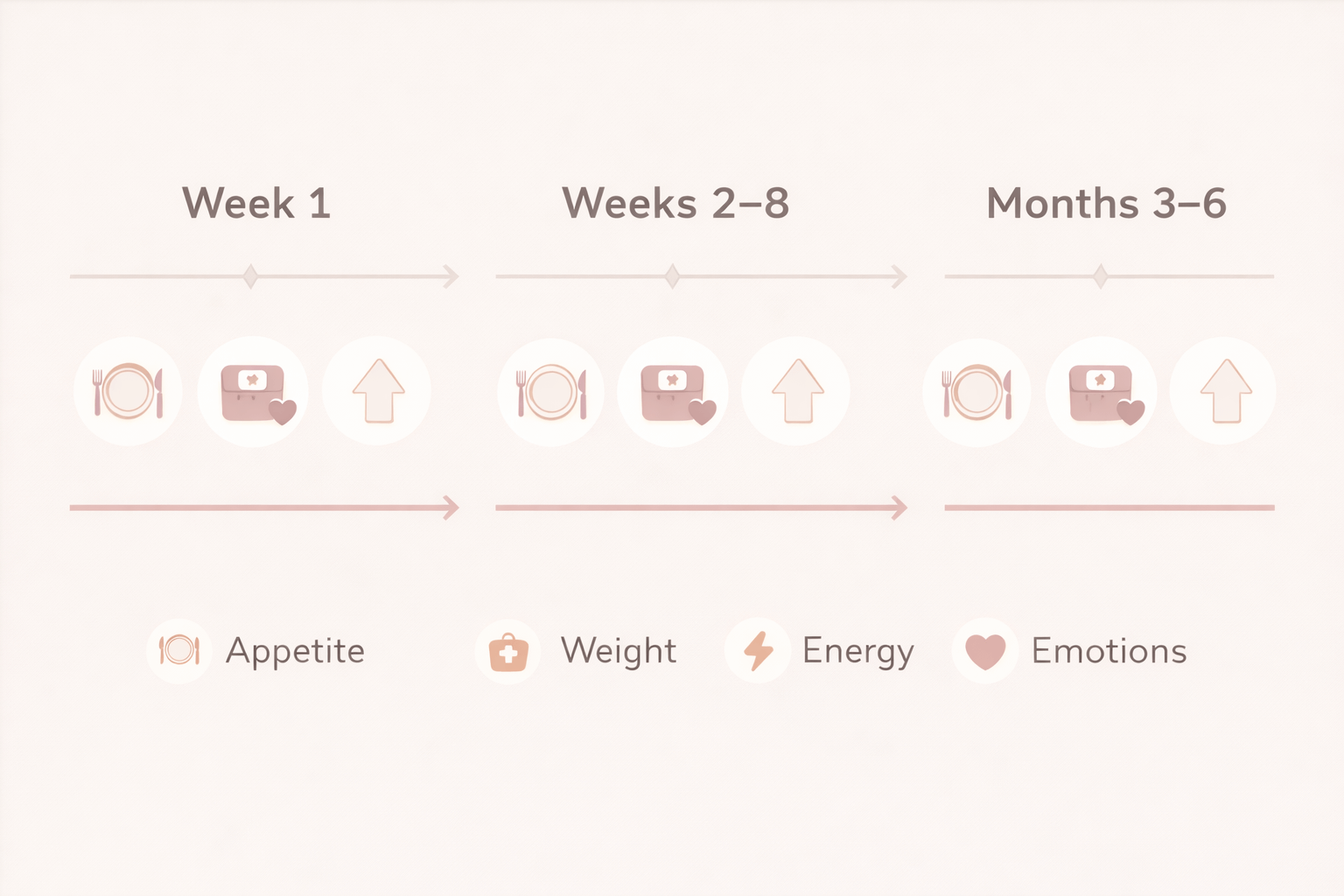
Timeline of changes
- Week 1: You’ll likely notice your hunger starting to return. Foods that didn’t seem appealing before might suddenly grab your attention again. You may feel full more slowly after meals, needing larger portions to reach the same level of satiety.
- Weeks 2 to 8: This is when many people start to see changes on the scale. It’s common to gain a few pounds initially — and part of that may simply be water retention or the return of normal intestinal content. Your appetite may be stronger than it was during treatment, and you’ll need to be more mindful when managing portion sizes.
- Months 3 to 6: This is where your journey becomes more individualized. Some people successfully stabilize their weight, while others continue to gain weight gradually. Much depends on the habits you built during treatment and the lifestyle changes you’ve managed to maintain.
Will you gain all the weight back?
This is the question everyone asks — and you deserve an honest answer: maybe, but not necessarily.
Studies show that many people regain a portion of the weight they lost after stopping weight loss medications. Research suggests that between 50% and 70% of individuals may regain a significant amount of weight within a year after discontinuing treatment. But here’s what those numbers don’t tell you: that statistic isn’t a guaranteed outcome.
Weight regain depends heavily on individual factors. If you made real lifestyle changes during treatment — built new eating habits, created a consistent exercise routine, worked on emotional patterns related to food — your chances of maintaining the results are much higher.
It also matters why you gained weight in the first place. If it was due to modifiable habits, you have more power to maintain the loss. If hormonal, genetic, or underlying medical conditions were involved, maintaining results may be more challenging without additional support.
It’s also important to distinguish between weight regain and rebound effect. Some people regain the exact weight they lost. Others may even gain more, especially if they fully return to old eating patterns. But many people manage to keep most of the weight off, or only regain a small portion.
Managing the transition successfully
Stopping medication doesn’t have to mean giving up your results. With planning and the right support, you can navigate this transition much more smoothly.
Before you stop
The time to prepare for stopping is before you actually stop. Talk to your doctor about a gradual tapering plan, if appropriate. Some people benefit from slowly lowering the dose, although this isn’t always possible with every formulation.
During the final months of treatment, focus on building eating habits you can maintain without the appetite-suppressing effects of the medication. That means finding nutritious foods you genuinely enjoy, creating consistent meal patterns, and learning to recognize true hunger signals versus emotional hunger.
Strengthen your exercise routine while you’re still on the medication. Regular physical activity not only burns calories but also helps regulate appetite hormones, improves mood, and boosts your metabolism. Choose activities you genuinely like — not just the ones that burn the most calories.
Consider working with a nutritionist or a therapist who specializes in eating behaviors. These professionals can help you develop personalized strategies to maintain your progress without relying on medication.
After you stop
Once you’ve stopped, self-monitoring becomes your best ally — but without obsession. Weigh yourself regularly, maybe once or twice a week, to catch trends early. But keep in mind that 2–5 pounds of fluctuation is completely normal and doesn’t mean you’re “failing.”
Pay attention to non-scale victories too. How are your clothes fitting? How do you feel physically? Are your energy levels okay? These markers can be just as important as the number on the scale.
Keeping a food journal, even for just a few weeks post-medication, can help you spot patterns. Are you eating when you’re truly hungry, or when you’re bored, stressed, or emotional? That awareness is powerful.
Manage your expectations realistically. You may gain a few pounds after stopping — that’s normal and doesn’t automatically mean you’re slipping. Your body is adjusting. Give yourself grace and time to find your new balance.
And don’t underestimate the power of community. Support groups — whether in person or online — can offer encouragement, accountability, and reminders that you’re not alone in this journey.
Illusions can support you in this new phase
Did you know that body procedures can be powerful allies in maintaining or even enhancing your results after using weight loss medications?
At Illusions Plastic Surgery, we offer:
- Non-surgical aesthetic treatments for localized fat, skin laxity, and fluid retention
- Personalized body surgeries to redefine your contours and restore confidence
- An approach that considers your body, mind, and life stage
If you’re stopping semaglutide or tirzepatide and want to keep taking care of your body with safety, comfort, and self-confidence, our team is here for you.
❗Medical disclaimer: This article is for informational purposes only and does not replace professional medical advice. Always consult your doctor before making any changes to your medication regimen.