Speed up your recovery after plastic surgery means helping your body heal in the healthiest and safest way possible after a cosmetic procedure. Recovery is the biological process where your body repairs tissue, reduces inflammation, and rebuilds strength after surgery. It is not about forcing your body to heal faster or returning to normal activities before your surgeon says it is safe.
Many patients ask whether there is a way to recover more smoothly after procedures like tummy tuck, BBL, liposuction, facelift, or breast surgery. The short answer is yes — healthy habits, proper aftercare, and following medical instructions frequently support better healing and may help reduce complications. According to the American Society of Plastic Surgeons, patients who closely follow post-operative guidance often experience a more predictable recovery process.
At Illusions Plastic Surgery in West Palm Beach, recovery planning is treated as part of the surgical process itself. Patients receive detailed post-operative instructions, personalized follow-up care, and support designed around their specific procedure and anatomy.
What actually affects plastic surgery recovery?
Plastic surgery recovery depends on more than just the procedure itself. Your body’s healing response is influenced by factors like nutrition, sleep quality, circulation, hydration, age, smoking history, and how carefully you follow post-operative instructions.
Procedures such as liposuction, tummy tuck, breast augmentation, and BBL create controlled trauma to tissues. After surgery, the body immediately begins repairing blood vessels, reducing inflammation, and producing collagen. According to the Mayo Clinic, proper healing support frequently helps reduce stress on the immune system and supports tissue repair.
Patients frequently focus only on the surgery date itself, but recovery often has a major impact on final results. Swelling control, scar care, movement restrictions, and follow-up appointments all contribute to how the body heals over time.
1. Follow your surgeon’s instructions carefully
One of the most important ways to speed up your recovery after plastic surgery is following your surgeon’s instructions exactly as provided. These guidelines are designed around the procedure performed, your medical history, and your body’s healing process.
Most post-operative instructions include:
- Take medications correctly: Pain medication, antibiotics, and anti-inflammatory medications are prescribed to support comfort and reduce risks during healing.
- Attend follow-up appointments: Your surgeon monitors swelling, incision healing, and circulation during recovery visits.
- Avoid physical strain: Heavy lifting and exercise too early frequently increase swelling and stress healing tissues.
- Keep incision areas clean: Proper wound care helps reduce infection risks and supports smoother scar healing.
At Illusions Plastic Surgery, patients receive detailed recovery instructions before surgery so they know what to expect during each phase of healing.
2. Prioritize sleep and rest
Sleep frequently plays a major role in healing after surgery. During deep sleep, the body releases hormones involved in tissue repair, immune regulation, and collagen production.
Research published by the National Institutes of Health shows that sleep deprivation may negatively affect wound healing and immune function. Patients recovering from plastic surgery often notice increased fatigue during the first days after their procedure because the body is using additional energy to heal.
To support recovery:
- Sleep with proper positioning recommended by your surgeon
- Avoid sleeping on surgical areas
- Keep your recovery environment quiet and comfortable
- Maintain consistent sleep schedules
Patients recovering from BBL procedures, for example, may need specialized positioning to avoid pressure on transferred fat cells.
3. Eat foods that support healing
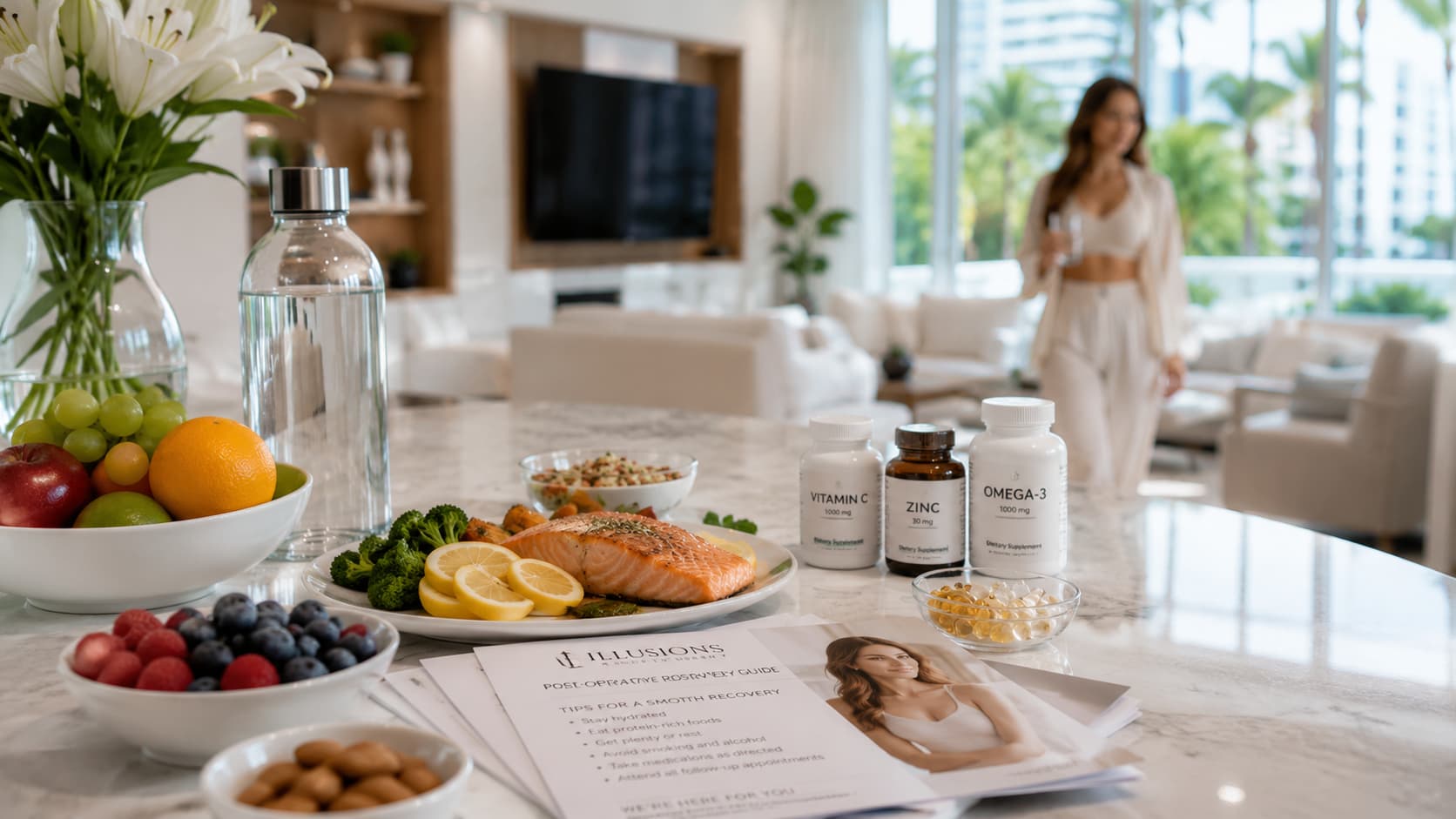
Nutrition frequently affects how efficiently the body repairs tissue after surgery. Protein, vitamins, minerals, and hydration all contribute to collagen production and immune support.
Nutrients that frequently support surgical recovery
| Nutrient | Why it matters | Food examples |
| Protein | Supports tissue repair | Chicken, eggs, fish |
| Vitamin C | Helps collagen production | Citrus fruits, berries |
| Zinc | Supports immune response | Beans, nuts |
| Iron | Helps oxygen circulation | Spinach, lean meats |
| Water | Supports circulation | Water, electrolyte drinks |
Patients are frequently advised to avoid highly processed foods, excessive sodium, and dehydration during recovery because these factors may worsen swelling.
Learn more:
👉 How Much Help Do You Really Need at Home After Surgery?
4. Stay hydrated during recovery
Hydration supports circulation, oxygen delivery, and tissue repair after surgery. Water also helps the body regulate inflammation and remove waste products created during healing.
Patients who are dehydrated may experience more fatigue, dizziness, constipation, and slower recovery. According to Harvard Health Publishing, hydration plays an important role in maintaining healthy circulation and overall body function.
Simple ways to stay hydrated include:
- Drinking water consistently throughout the day
- Limiting caffeine during early recovery
- Using electrolyte beverages when recommended
- Eating water-rich foods like fruit
For procedures involving swelling, such as liposuction or tummy tuck surgery, hydration frequently helps support lymphatic circulation.
5. Avoid smoking and alcohol
Smoking and alcohol frequently interfere with the body’s healing process after plastic surgery. Nicotine reduces blood flow and oxygen delivery to healing tissues, while alcohol may increase inflammation and dehydration.
According to the American Society of Plastic Surgeons, nicotine exposure is associated with increased surgical healing complications because healthy blood circulation is necessary for tissue repair.
Many surgeons recommend stopping smoking several weeks before and after surgery to support safer healing conditions.
Attention: Smoking before or after plastic surgery may increase risks of delayed healing, skin complications, poor scar quality, and infection. Patients should always discuss nicotine use honestly with their surgeon.
6. Move your body carefully
Rest is important after surgery, but complete inactivity for long periods may also create problems. Light movement frequently supports circulation and may help reduce risks of blood clots.
Most surgeons recommend short walks during early recovery because gentle movement encourages blood flow without placing stress on healing tissues.
Helpful recovery movement habits may include:
- Taking slow walks around the house
- Stretching only when approved
- Avoiding strenuous workouts
- Following lifting restrictions carefully
The timeline for returning to exercise depends on the procedure performed. A facelift recovery timeline is very different from tummy tuck or BBL recovery.
7. Use compression garments correctly
Compression garments are medical garments designed to support healing tissues, reduce swelling, and improve comfort after surgery. They are commonly used after liposuction, tummy tuck, BBL, and body contouring procedures.
Compression does not “shape” the final result by itself. Instead, it frequently helps manage swelling and supports the body while tissues heal.
Patients are usually instructed to:
- Wear garments for the recommended time
- Avoid excessively tight compression
- Keep garments clean
- Replace garments when needed
At Illusions Plastic Surgery, recovery recommendations are customized depending on the procedure and the patient’s anatomy rather than using the same recovery plan for everyone.
8. Don’t ignore swelling and inflammation
Swelling is a normal part of healing after plastic surgery. Inflammation is the body’s natural response to tissue repair and frequently improves gradually over time.
However, patients should understand the difference between expected symptoms and signs that require medical attention.
Recovery symptoms guide
| Symptom | Frequently normal | Contact your surgeon |
| Mild swelling | Yes | No |
| Bruising | Yes | No |
| Mild discomfort | Yes | No |
| Fever | No | Yes |
| Severe redness | No | Yes |
| Sudden swelling increase | No | Yes |
Patients frequently become concerned when swelling lasts longer than expected. Final surgical results often continue improving for weeks or months depending on the procedure.
Learn more:
👉 How to manage pain and swelling after cosmetic surgeries
Why choosing the right surgeon affects recovery
Recovery is influenced by much more than rest and medication. Surgical technique, safety protocols, precision during the procedure, and the quality of post-operative care frequently affect swelling levels, healing time, scar quality, and overall comfort during recovery.
Choosing a board-certified plastic surgeon matters because certification reflects advanced surgical training, patient safety standards, and specialized expertise in cosmetic procedures.
At Illusions Plastic Surgery in West Palm Beach, recovery is treated as part of the full patient experience — not simply the period after surgery. The clinic’s approach combines surgical planning, individualized aftercare, detailed recovery education, and close follow-up support designed to help patients heal with more confidence and less uncertainty.
Many patients throughout South Florida choose Illusions Plastic Surgery because the clinic combines aesthetic results with a strong focus on safety, communication, and long-term patient care. The practice serves both English-speaking and Spanish-speaking patients and provides guidance throughout every stage of recovery.
Recovery frequently feels smoother when patients understand what is happening during each healing stage and have direct access to an experienced surgical team when questions come up. At Illusions Plastic Surgery, that support continues long after the procedure itself.