You went through rhinoplasty and, now that months have passed, you realize that something didn’t turn out exactly as you expected.
Maybe the shape doesn’t match what you imagined, or functional issues started to appear.
The question that naturally arises is: how long do you need to wait before considering a revision rhinoplasty?
The waiting period that surgeons recommend
Most plastic surgeons in the United States suggest that patients wait at least 12 months after the initial rhinoplasty before performing a revision. You might be wondering why so long, especially if the results already seem unsatisfactory after a few months.
The answer lies in the complex healing process of the nose. Unlike other areas of the body, the nose continues changing and adjusting throughout the entire first year. Swelling may appear to have disappeared after a few weeks, but there’s a deeper inflammation in the tissues that persists for many months.
According to data from the American Society of Plastic Surgeons, approximately 10 to 15% of patients who undergo rhinoplasty end up seeking revision rhinoplasty. This number demonstrates that you’re not alone if you feel the need for adjustments.
How your nose transforms throughout the first year
The healing process of the nose after rhinoplasty happens in well-defined stages. Understanding each phase can help you have realistic expectations about when to consider revision rhinoplasty.
First weeks post-surgery:
- The most visible swelling begins to decrease rapidly
- You can return to normal activities
- The nose already presents a more defined shape
- But this is just the surface of the story
First six months:
- About 50 to 60% of swelling gradually decreases
- You may notice small weekly changes in contour
- Nasal definition continues improving
- Internal tissue is still in active healing process
Between six months and one year:
- Changes become more subtle, but still happen
- Internal scar tissue continues remodeling
- Skin accommodates over the new structure
- Changes may be almost imperceptible day to day
After 12 months:
- You’ll have a real and definitive view of the final result
- This is the moment for an honest evaluation about revision rhinoplasty
- The nose has reached its stable and mature form
When minor adjustments can happen earlier
There’s a significant difference between a complete revision rhinoplasty and minor adjustments that some surgeons can perform earlier. Minor corrections using dermal fillers or small interventions can happen after six months in specific cases.
At Illusions Plastic Surgery, located in West Palm Beach, FL, the team evaluates each case individually. Some situations allow less invasive interventions before the complete one-year period, especially when involving minimal asymmetries that can be corrected without extensive surgery.
Situations that may require faster revision
Although the general rule is to wait 12 months, some circumstances may justify earlier intervention.
If you developed significant breathing difficulties after the initial rhinoplasty, your surgeon may recommend a correction before the complete period. Severe nasal obstructions, collapse of nasal valves, or complications affecting your daily quality of life shouldn’t be ignored.
Persistent infections, serious healing problems, or obvious deformities caused by complications may also need faster attention. In these situations, waiting a full year could even worsen the problem.
Factors that influence the ideal time for your revision
Each person heals differently, and several factors can affect when you’ll be truly ready for revision rhinoplasty:
- Complexity of the initial surgery: More extensive rhinoplasties generally require longer recovery periods. If your first surgery involved significant structural work, you may need up to 18 months before considering a revision.
- Your age and general health: Younger patients tend to heal faster, but this doesn’t mean they should rush revision rhinoplasty. Faster healing still requires the complete time for stabilization.
- Skin thickness: Patients with thicker skin experience swelling for more prolonged periods. Your skin may continue adjusting to the new nasal structure for up to two years in some cases.
- Smoking and medical conditions: Smokers and people with certain medical conditions may have slower and more complicated healing processes.
What happens during the revision rhinoplasty consultation
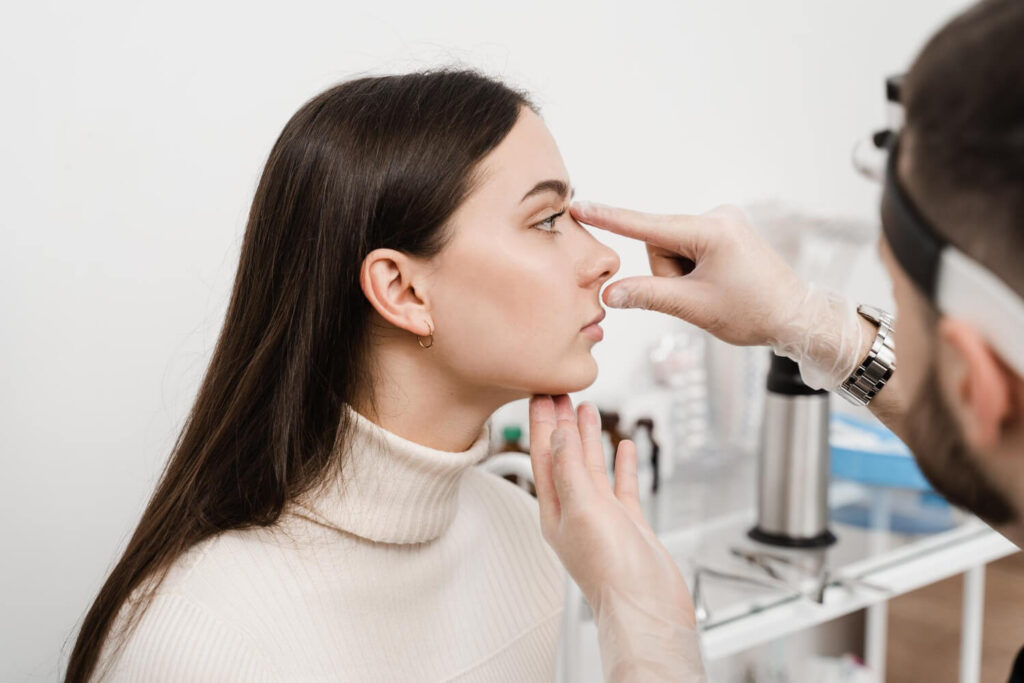
When you finally decide to explore the possibility of revision rhinoplasty, the consultation with your plastic surgeon will be different from the first time. The professional will evaluate not only the aesthetic result but also how the tissue healed and behaved.
Imaging exams may be requested to evaluate the internal structures of the nose. Detailed photographs from different angles help document the areas you’d like to improve. This also represents an opportunity to discuss realistic expectations about what revision rhinoplasty can achieve.
Why patience can bring better results
You’ve probably heard that patience is a virtue, and this has never been truer than in the context of revision rhinoplasty. Rushing the process can lead to additional complications and even more unsatisfactory results.
Studies published in the Aesthetic Surgery Journal demonstrate that patients who wait at least 12 months before performing revision rhinoplasty present significantly higher satisfaction rates. Mature scar tissue is easier to work with, and the surgeon can better evaluate what needs to be modified.
Operating on a nose that’s still recovering can cause more trauma to the tissue, increase the risk of complications, and potentially require additional revisions in the future. Each additional surgery makes the next procedure more challenging.
Preparing yourself mentally for the waiting period
Waiting a full year when you’re not satisfied with your appearance can be emotionally challenging. You invested time, money, and hopes in the original rhinoplasty, and discovering that you need a revision can be frustrating.
Maintaining realistic expectations from the beginning helps. Approximately 80% of patients are satisfied with the results of the first rhinoplasty, but revisions are part of the nature of this surgery.
The nose represents a complex facial structure, and minor adjustments are completely normal.
Read more:
👉Steps to Take If You’re Unhappy With Your Plastic Surgery Results
Questions you should ask during the consultation
When you schedule your consultation to discuss revision rhinoplasty, prepare a list of specific questions:
- How long do you really recommend I wait based on my specific case?
- What changes do you still expect to see in my nose over the coming months?
- Is there anything I can do now to improve future results?
- What type of revision rhinoplasty would be necessary in my case?
- What are the limitations considering the existing scar tissue?
Making the right decision for you
Deciding about revision rhinoplasty shouldn’t be rushed. You deserve time to process your feelings about the initial results, allow your body to complete the healing process, and consult experienced professionals.
At Illusions Plastic Surgery, patients receive support throughout the entire recovery process of the initial rhinoplasty. This follow-up allows early identification of whether revision rhinoplasty may be necessary and adequately plan the timing.
Remember that revision rhinoplasty represents an even more delicate procedure than the initial surgery. Choosing the right moment and the appropriate surgeon can make all the difference between mediocre results and the nose of your dreams.
Your nose deserves the necessary time to reveal its true potential after the first surgery. Only then can you and your surgeon work together to achieve the result you always imagined.