
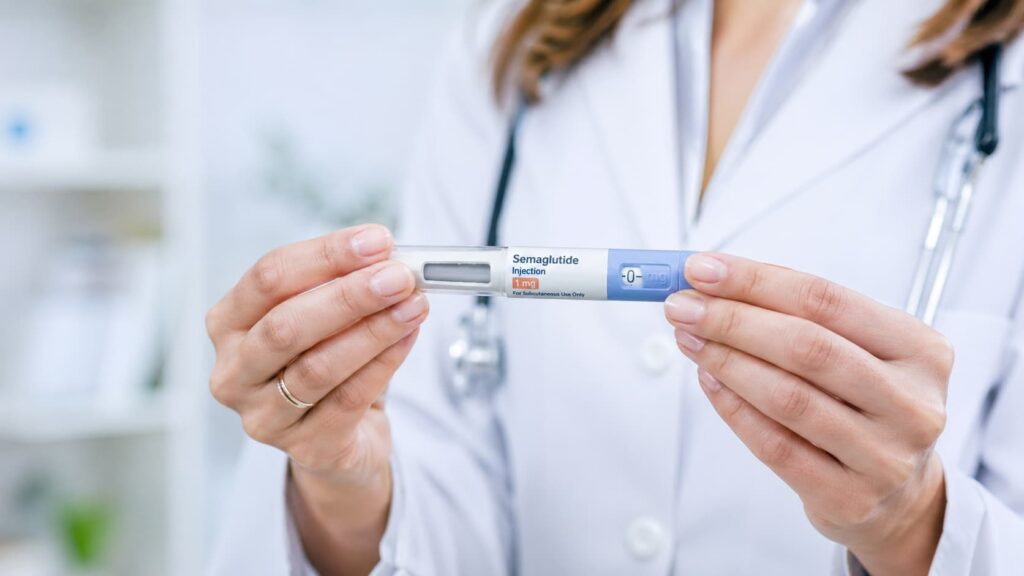
Semaglutide starts working within days of your first injection — but the results you can actually see and feel build up over weeks. That gap between “the medication is active” and “I notice a difference on the scale” is exactly what leaves most people wondering whether the treatment is actually doing anything. Understanding that timeline does not just ease the anxiety of waiting; it helps you make smarter decisions about your habits, your expectations, and your overall body transformation plan.
This guide breaks down the semaglutide weight loss timeline week by week, explains the variables that shape how quickly you respond, and shows you how, at Illusions Plastic Surgery in West Palm Beach, FL, medically supervised semaglutide programs are designed to deliver results that last.
What is semaglutide?
Semaglutide is an FDA-approved injectable medication belonging to a class of drugs known as GLP-1 receptor agonists (glucagon-like peptide-1). It was originally developed to treat type 2 diabetes and is now also approved for chronic weight management in adults with obesity or overweight with at least one weight-related health condition. It is not a supplement, a fat burner, or an appetite pill — it is a prescription medication with a hormonal mechanism of action backed by multiple large-scale clinical trials.
Semaglutide is commercially available under the brand names Ozempic (approved for type 2 diabetes) and Wegovy (approved for weight management), as well as through compounded versions dispensed by licensed medical clinics under physician supervision.
How semaglutide works in your body
Semaglutide works by mimicking GLP-1, a hormone your gut naturally releases after you eat. This hormone signals the brain that your body is satisfied, slows gastric emptying, and helps regulate blood sugar levels.
The practical effect is a significant reduction in hunger, less compulsive eating behavior (often described as quieting the “food noise”), and a lasting feeling of fullness even with smaller portions.
After a weekly injection, semaglutide reaches its peak concentration in the bloodstream within one to three days, according to prescribing data from Novo Nordisk. However, the clinical effects — particularly weight loss — build gradually over weeks as the dose is titrated upward and the body adjusts to the medication. That gradual build is intentional: it minimizes side effects like nausea and allows the hunger-regulation system to recalibrate sustainably.
Read more:
👉 How does semaglutide work to lose weight?
Week-by-week timeline: what to expect
The timeline below is based on data from the STEP 1 clinical trial (Wilding et al., NEJM, 2021) and FDA prescribing guidelines. Individual results vary — but this gives you a grounded, realistic reference point.
| Period | What frequently happens |
| Weeks 1–4 | The body begins responding to the medication. Many patients report reduced appetite and less interest in high-calorie foods. Weight loss at this stage is typically modest — clinical data suggests an average of about 2% of initial body weight in the first month. For a 200-lb person, that is roughly 4 lbs. |
| Weeks 4–8 | Appetite suppression becomes more noticeable. With dosage still in the lower titration range, many patients lose between 5 and 10 lbs. Consistency with food choices plays a key role during this window. |
| Weeks 8–16 | Dosage approaches therapeutic levels. Weight loss tends to become more steady — frequently 10 to 15 lbs or more, depending on individual profile, diet, and activity level. |
| Week 17 onward | With the maintenance dose established, semaglutide’s effects consolidate. The STEP 1 trial documented an average of 15–16% total body weight loss by week 68 at the 2.4 mg/week dose. |
A grounded perspective: Healthy, sustainable weight loss is generally 0.5 to 2 lbs per week. Patients who start at a higher BMI, adopt nutritional changes, and maintain physical activity consistently tend to achieve results at the higher end of that range.
Factors that influence how fast you see results
Semaglutide acts systemically, but how quickly results appear depends on individual variables. The main ones are:
- Adherence to the dosing schedule Semaglutide reaches its steady-state concentration in the body after approximately four to five weeks of regular weekly injections. Skipping or delaying doses directly disrupts that balance and slows the timeline.
- Diet composition Patients who follow higher-protein, lower-glycemic diets frequently see faster results. Semaglutide amplifies the effects of better food choices — it does not replace them. Protein-rich meals also help preserve muscle mass during weight loss.
- Physical activity Regular exercise amplifies the caloric deficit the medication creates and supports metabolic health. Even moderate activity — 30 minutes of walking most days — measurably improves outcomes when combined with GLP-1 therapy.
- Individual metabolism Factors such as insulin resistance history, concurrent medications, hormonal conditions (like hypothyroidism), and history of restrictive dieting all influence how quickly your body responds to semaglutide.
- Dose titration Treatment typically starts at a low dose (often 0.25 mg/week) and is increased gradually to minimize side effects. Each dose adjustment may require two to four weeks of adaptation before the new level produces perceptible changes — which is why patience in the early weeks pays off later.
Semaglutide vs. other weight loss approaches
| Criterion | Semaglutide (GLP-1) | Diet & exercise alone | Bariatric surgery |
| Mechanism | Hormonal — reduces hunger, slows gastric emptying | Caloric restriction and energy expenditure | Surgical gastric reduction |
| Time to first effects | 1–4 weeks (appetite); 4–12 weeks (weight) | Variable, depends on adherence | Immediate post-recovery |
| Average documented weight loss | ~15% of body weight at 68 weeks (STEP 1) | Typically 5–10% without supervision | 25–35% in some cases |
| Requires medical supervision | Yes | Not required | Yes (surgical procedure) |
| Reversibility | Yes (upon discontinuation) | Yes | Partial or irreversible |
| Primary indication | Obesity or overweight with comorbidities | All profiles | Severe obesity (BMI ≥ 40, or ≥ 35 with comorbidity) |
Read more:
👉 What is the difference between semaglutide and tirzepatide?
Why choose Illusions Plastic Surgery for your semaglutide program
At Illusions Plastic Surgery in West Palm Beach, FL, the semaglutide program is built around one principle: no two patients are the same. Every treatment plan is individually designed, with monthly progress evaluations, dosage adjustments based on your response, and continuous oversight from a medically trained team — not a standardized protocol handed to everyone who walks through the door.
The clinical expertise behind the program starts with Dr. James R. Lyons, board-certified by the American Board of Plastic Surgery since 1986, with training at Georgetown University and hospital experience at Yale New Haven Hospital. That same surgical-level rigor applies to how weight loss programs are structured and monitored here.
What makes Illusions different from general weight loss clinics is the ability to integrate GLP-1 therapy with body contouring — a perspective only a board-certified plastic surgery team can offer. The clinic serves both English- and Spanish-speaking patients, with dedicated support for those traveling from out of town.
👉 Schedule your free consultation and find out if semaglutide is the right fit for your goals.
Frequently asked questions
No. The medication enters the bloodstream within one to three days of injection, but visible clinical effects — reduced appetite and weight loss — take several weeks to develop as the dose is titrated upward progressively.
Clinical data indicates that patients frequently lose about 2% of their initial body weight in the first month. For someone weighing 200 lbs, that is approximately 4 lbs. More significant results typically appear from the second and third months onward.
The medication produces results even without major lifestyle modifications, but clinical trials consistently show that patients who combine it with dietary adjustments and physical activity achieve substantially better outcomes.
Often yes, but individual medical evaluation is required. There are specific protocols that define when the medication must be discontinued before a surgical procedure. At Illusions Plastic Surgery, this integrated planning is part of the pre-operative consultation process.
Studies indicate that a portion of the weight lost tends to return after discontinuation, particularly without sustained lifestyle changes. This is why ongoing medical follow-up is important for planning the transition safely and maintaining results long-term.