

If you’ve been considering medication-assisted weight loss, you’ve probably wondered just how much weight you can lose on GLP-1 injections.
Based on recent clinical data, the average patient loses between 11% and 20% of their body weight over 64 to 72 weeks, depending on the medication, dose, and how consistently they stick with the protocol.
This guide walks through the real numbers, pulled from peer-reviewed trials and real-world studies, so you can set realistic expectations before starting treatment.
What are GLP-1 injections?
GLP-1 injections are FDA-approved injectable medications that mimic glucagon-like peptide-1, a natural hormone the gut releases after eating. They slow gastric emptying, increase satiety, and regulate blood sugar, which together reduce overall calorie intake. They are not appetite suppressants in the old sense, and they are not a replacement for nutrition and movement; they are metabolic medications that make sustained calorie reduction biologically realistic.
The two most prescribed options today are semaglutide (sold as Wegovy for weight loss and Ozempic for type 2 diabetes) and tirzepatide (sold as Zepbound for weight loss and Mounjaro for diabetes).
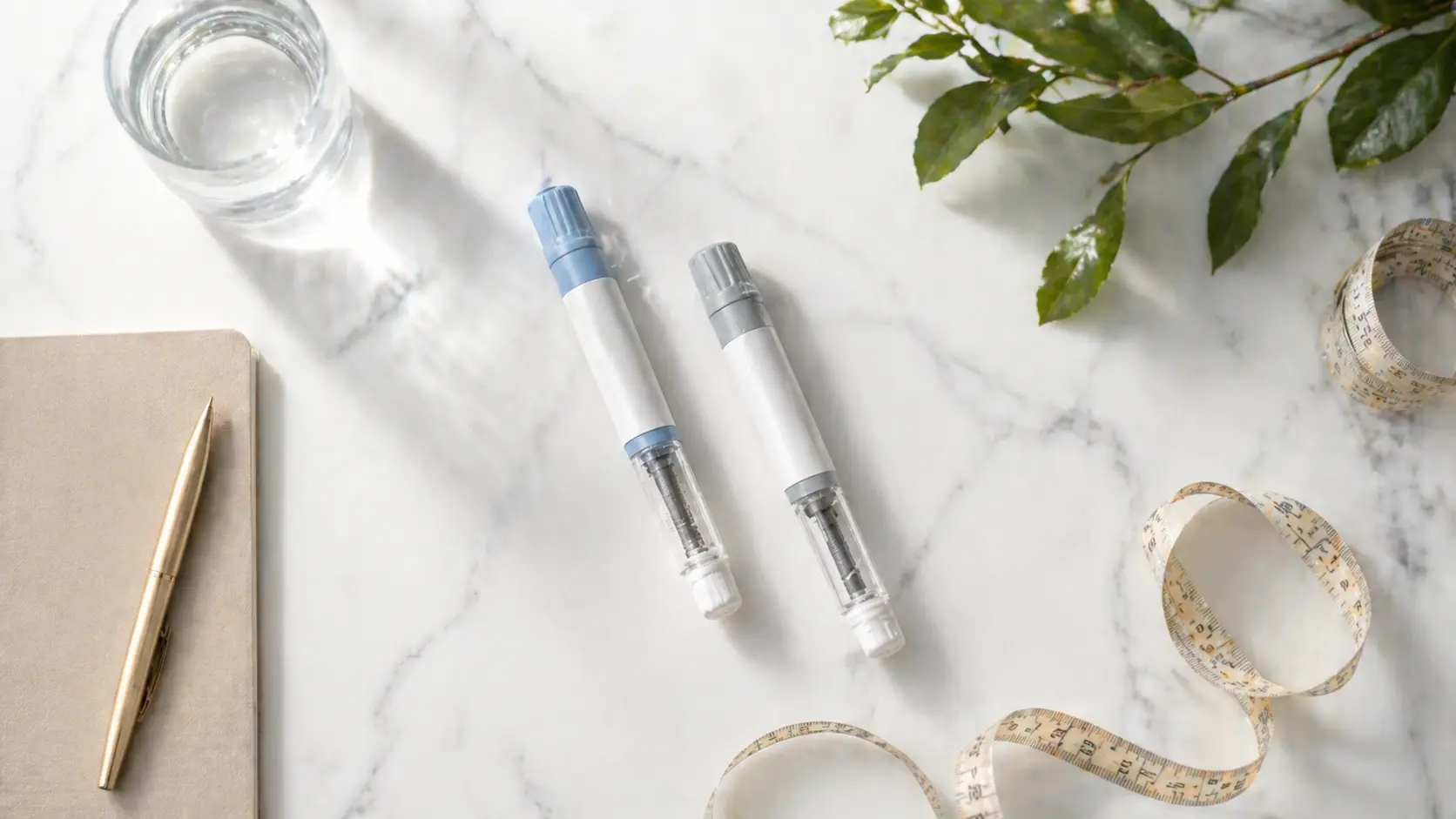
Tirzepatide is unique in that it activates both GIP and GLP-1 receptors, which is why it tends to produce greater weight loss in head-to-head studies. Both are weekly injections delivered with a small, pre-filled pen, typically into the upper arm, thigh, or abdomen.
How much weight can you lose on GLP-1 injections on average
The honest answer is: it depends on which medication you use, what dose you reach, and whether you stay on treatment.
According to Eli Lilly’s SURMOUNT-5 head-to-head trial, tirzepatide produced an average weight loss of 20.2% compared to 13.7% with semaglutide over 72 weeks in adults with obesity.
Real-world numbers are slightly lower because not every patient reaches or maintains the maximum dose.
A Cleveland Clinic retrospective study of 7,881 patients found that those who stayed on treatment lost an average of 11.9% of their body weight at one year, while those who continued at high maintenance doses reached 13.7% with semaglutide and 18.0% with tirzepatide.
| Medication | Clinical trial average (72 weeks) | Real-world average (continuous, high dose) |
| Semaglutide (Wegovy) | 13.7% | 13.7% |
| Tirzepatide (Zepbound) | 20.2% | 18.0% |
| High-dose semaglutide (7.2 mg) | ~21% | Limited data |
For a 200-lb patient, that translates to roughly 27 to 40 pounds lost over a year of consistent treatment. Patients who reach higher maintenance doses and pair the medication with structured nutrition and resistance training tend to land at the upper end of that range.
Read more:
👉 How fast does semaglutide work?
Monthly weight loss timeline on GLP-1 injections
Weight loss on GLP-1 medications is gradual and dose-dependent, because doses are titrated up slowly to minimize side effects. Here is what most patients can realistically expect, based on published outcomes and our clinical experience at Illusions Plastic Surgery:
- Track week 1 to month 1. Most patients report 4 to 10 pounds of initial loss, mostly from reduced appetite and water weight. This early phase tells your provider whether the starter dose is well tolerated.
- Reach month 2 to 3. Cumulative loss typically lands between 5% and 8% of body weight as the dose escalates. This is when the appetite signal becomes consistent and habits start to lock in.
- Hit month 6. Average loss climbs to 10% to 15% on maintenance doses. This is the threshold associated with clinically significant metabolic improvements in blood pressure, A1C, and lipids.
- Pass month 12. Patients who stay on treatment frequently reach 15% to 20%. Long-term adherence is the strongest predictor of total weight reduction.
- Continue beyond year 1. Maintenance dosing helps preserve the loss; according to the Cleveland Clinic data, discontinuing within 3 months drops average loss to just 3.6%.
Semaglutide vs tirzepatide: which one delivers more weight loss
Both medications are weekly injections, both are FDA-approved for chronic weight management, and both work on GLP-1 receptors. The key difference is that tirzepatide also activates the GIP receptor, which appears to amplify weight loss.
| Criterion | Semaglutide | Tirzepatide |
| Mechanism | GLP-1 receptor agonist | Dual GIP + GLP-1 receptor agonist |
| Average weight loss (72 weeks, trial) | 13.7% | 20.2% |
| Brand for weight loss | Wegovy | Zepbound |
| Brand for diabetes | Ozempic | Mounjaro |
| Injection frequency | Once weekly | Once weekly |
| Side effect profile | Mostly mild-to-moderate GI | Mostly mild-to-moderate GI |
In the SURMOUNT-5 trial, tirzepatide produced 47% greater relative weight loss than semaglutide, but that doesn’t mean it’s automatically the better choice for every patient. Some people tolerate semaglutide better, insurance coverage often dictates which one is accessible, and individual response varies.
At Illusions Plastic Surgery, our team in West Palm Beach reviews your medical history, BMI, and goals to recommend the option most likely to deliver results for your body.
Read more:
👉 How Much Weight Can You Lose with Semaglutide?
What affects how much weight you lose on GLP-1 injections
Six factors consistently move the needle on results:
- Maintenance dose reached. Patients who reach the highest tolerated dose lose substantially more than those stuck on starter doses.
- Adherence over time. According to the Cleveland Clinic study, patients who discontinued within 3 months lost only 3.6% on average, compared to 11.9% for those who stayed on therapy.
- Nutrition quality. Adequate protein intake (roughly 0.7 to 1.0 g per pound of target body weight) helps preserve lean mass while losing fat.
- Physical activity. Resistance training is particularly important because rapid weight loss can reduce muscle alongside fat.
- Medical supervision. Monthly check-ins allow dose adjustments, side-effect management, and accountability.
- Individual metabolism. Insulin resistance, age, hormonal status, and starting BMI all influence how quickly your body responds.
This is where the difference between a mailed-prescription service and a medically supervised program becomes obvious.
The patients who reach the upper range of weight loss are almost always the ones receiving consistent clinical oversight.
Side effects and safety considerations
Most side effects are gastrointestinal and tend to fade within the first weeks of each dose increase.
The most common include nausea, constipation, mild abdominal discomfort, fatigue, and temporary appetite changes. Less common but more serious risks include pancreatitis and gallbladder issues, which is why monthly medical evaluation matters.
Who should not use GLP-1 injections: people with a personal or family history of medullary thyroid carcinoma or multiple endocrine neoplasia syndrome type 2, anyone with severe gastrointestinal disease (including gastroparesis), and those who are pregnant or breastfeeding. Always disclose your full medical history to your prescribing physician.
Why combine GLP-1 injections with plastic surgery at Illusions Plastic Surgery
At Illusions Plastic Surgery in West Palm Beach, GLP-1 treatment is part of a broader, medically supervised path designed for patients who want both weight loss and a refined body contour.
Our program is led by Dr. James R. Lyons, board-certified by the American Board of Plastic Surgery since 1986. That’s nearly four decades of plastic surgery experience, with medical training at Georgetown University and hospital experience including Yale New Haven Hospital.
Three things make our protocol different from a typical med-spa or telehealth GLP-1 service:
- Monthly evaluations with dose adjustment. Every visit reviews tolerance, body composition, and response, instead of mailing a fixed dose with no follow-up.
- FDA-approved medications only. We prescribe semaglutide and tirzepatide directly through our medical team, with no compounded mystery formulations.
- Surgical integration when needed. Significant GLP-1 weight loss often leaves loose skin or stubborn pockets of fat, which is why many patients pair their program with Lipo 360, tummy tuck, or a mommy makeover once weight has stabilized.
After major weight loss, the skin often does not retract on its own, and isolated fat deposits can persist regardless of how disciplined you are. Having a board-certified plastic surgeon plan your full transformation, from the first injection to the final contouring procedure, means each phase supports the next.
If you want to explore which GLP-1 protocol fits your goals, our team in West Palm Beach offers a free consultation to map out your plan.
Frequently asked questions
Most patients lose between 5% and 8% of their starting body weight in the first three months, which translates to roughly 10 to 18 pounds for a 200-lb adult, depending on dose escalation and adherence.
Frequently, yes. Published studies show partial weight regain within a year of stopping treatment if lifestyle habits aren’t firmly in place, which is why our team plans a maintenance phase before discontinuation.
Current evidence supports multi-year use under medical supervision, with semaglutide approved by the FDA since 2021 and tirzepatide since 2023. Long-term safety data continues to expand, and monthly check-ins monitor for any complications.
Pricing varies based on medication, dose, and treatment length. During your free consultation at Illusions Plastic Surgery, our team builds a personalized plan with transparent monthly costs and financing options through Cherry and CareCredit.