
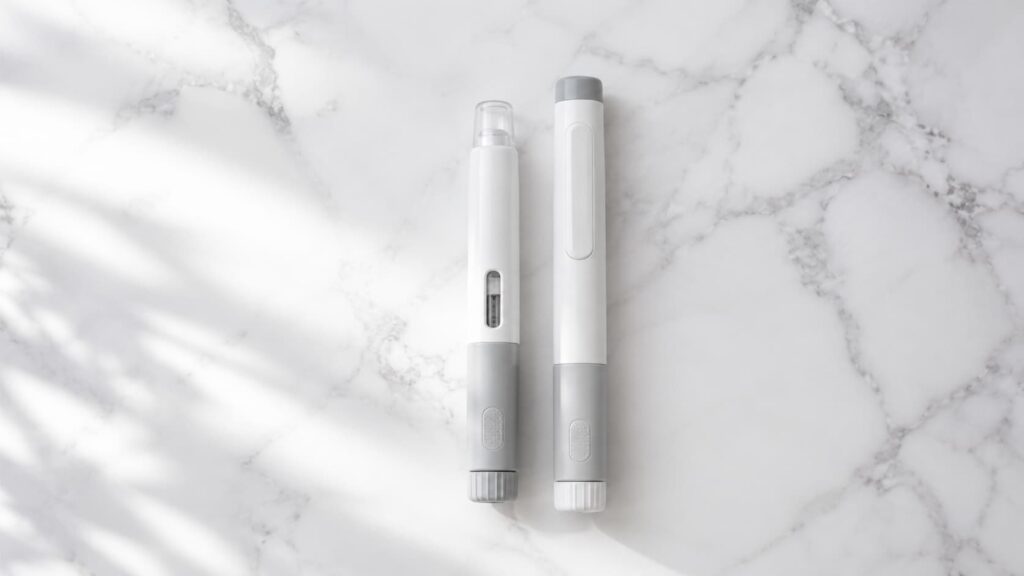
If you’ve been researching weight loss injections and come across the names Mounjaro and Wegovy, you probably have one central question: which one actually works better?
The answer isn’t simple — and any site that gives you a one-line response is probably oversimplifying. What the most recent clinical studies show is that both options produce real results, but with meaningful differences in mechanism of action, effectiveness, and side effect profiles.
In this guide, you’ll understand how each medication works, what the data says about weight loss outcomes, and how this decision connects to a broader health plan — including procedures like plastic surgery, which frequently play a role in the same body transformation journey.
What are Mounjaro and Wegovy?
Mounjaro (tirzepatide) is an injectable medication developed by Eli Lilly, originally approved by the FDA in May 2022 for the treatment of type 2 diabetes. It is not a dietary supplement or a metabolic booster — it is a dual GIP and GLP-1 receptor agonist, administered as a subcutaneous injection once a week. In the United States, the version specifically approved for obesity is marketed as Zepbound, but the active ingredient tirzepatide is the same one found in Mounjaro.
Wegovy (semaglutide 2.4 mg) is an injectable medication developed by Novo Nordisk, approved by the FDA in June 2021 specifically for the chronic management of weight in adults with obesity. It is a GLP-1 receptor agonist — the same drug class as Ozempic, but at a higher dose and with an indication targeted at weight loss. Like Mounjaro, it is administered as a subcutaneous injection once a week.
Both belong to the family of incretin agonists, hormones that regulate satiety and glucose metabolism. The difference lies in how many receptors each one activates — and that directly impacts results.
How each one works in the body?
Wegovy acts on a single receptor: GLP-1 (glucagon-like peptide-1). When activated by semaglutide, this receptor slows gastric emptying, reduces appetite, and increases the feeling of fullness. It is a well-understood mechanism, with more than a decade of accumulated clinical data.
Mounjaro goes further: it acts simultaneously on GLP-1 and GIP (glucose-dependent insulinotropic polypeptide) receptors. GIP is a second incretin hormone that amplifies the insulin response and appears to potentiate the effects of GLP-1 on body fat. This dual action is what differentiates tirzepatide pharmacologically — and is considered the main reason why studies have consistently shown superior weight reduction results.
In plain terms: Wegovy “slows hunger” through one pathway. Mounjaro does the same, but through two simultaneous pathways.
Mounjaro vs Wegovy: a direct efficacy comparison
| Criterion | Mounjaro (tirzepatide) | Wegovy (semaglutide 2.4 mg) |
|---|---|---|
| Mechanism of action | Dual GLP-1 + GIP | GLP-1 |
| Maximum approved dose | 15 mg/week | 2.4 mg/week |
| Average weight loss (SURMOUNT-5, 72 weeks) | 20.2% | 13.7% |
| Average weight loss (SURMOUNT-1, tirzepatide 15 mg) | ~22.5% | — |
| Average weight loss (STEP trials, semaglutide 2.4 mg) | — | ~15% |
| Relative weight loss advantage | 47% more than semaglutide | Comparison baseline |
| Proven cardiovascular benefit (SELECT trial) | Under evaluation | Yes (20% risk reduction) |
| Injection frequency | Once a week | Once a week |
| Route of administration | Subcutaneous | Subcutaneous |
Side effects: what to expect from each
Both medications share a predominantly gastrointestinal side effect profile, particularly in the first weeks of use or after dose adjustments. The most frequently reported include:
- Nausea
- Diarrhea or constipation
- Vomiting
- Reduced appetite (expected, part of the mechanism)
- Mild fatigue
In SURMOUNT-5, gastrointestinal adverse events were the most common in both groups and were generally mild to moderate in severity. The study was not designed to directly compare tolerability between the two medications, but tirzepatide’s safety profile was consistent with previous SURMOUNT trials.
Both carry a warning about potential risk of thyroid C-cell tumors observed in rodent studies — although the clinical relevance in humans has not been established. The medications are contraindicated in people with a personal or family history of medullary thyroid carcinoma or multiple endocrine neoplasia type 2 (MEN-2).
Notice: If you are pregnant, planning to become pregnant, breastfeeding, or have a history of pancreatitis, discuss these factors with your doctor before considering either of these treatments.
Who can use each medication?
Wegovy (semaglutide 2.4 mg)
- Adults with BMI ≥ 30, or
- Adults with BMI ≥ 27 with at least one weight-related comorbidity (hypertension, type 2 diabetes, dyslipidemia, sleep apnea)
- Indicated as an adjunct to diet and exercise
Mounjaro (tirzepatide — prescribed in the U.S. for diabetes; Zepbound for obesity)
- Adults with BMI ≥ 30, or
- Adults with BMI ≥ 27 with at least one weight-related comorbidity
- Indicated as an adjunct to diet and exercise
In both cases, a prescription is required, and medical follow-up throughout treatment is what determines both safety and results. Neither medication works in isolation — diet, physical activity, and behavioral support significantly amplify outcomes.
Mounjaro and Wegovy as a starting point for body transformation
Losing weight with GLP-1 medications is a real achievement — but many people reach the end of the process and realize that while their weight has changed, their silhouette still doesn’t reflect the version of themselves they had envisioned. Loose skin after significant volume loss, residual fat redistribution in specific areas like the abdomen or flanks, or contours that simply didn’t respond as expected are common situations following semaglutide or tirzepatide use.
That is the point where plastic surgery and body contouring procedures come in as a natural continuation of a transformation program — not as an alternative to it.
At Illusions Plastic Surgery, in West Palm Beach, FL, we work with patients who have gone through weight loss journeys — including GLP-1 treatments — and arrive looking to refine their results: liposuction to remove stubborn localized fat, tummy tuck to retighten the abdominal wall, or procedures like the mommy makeover for women addressing multiple areas in a single intervention.
If you are evaluating Mounjaro, Wegovy, or have already completed a GLP-1 cycle and want to understand which procedures can complement your transformation, schedule a consultation at Illusions Plastic Surgery and speak directly with Dr. Lyons about your options.
📍 2005 Palm Beach Lakes Blvd, West Palm Beach, FL 33409
📞 +1 (561) 331-3191
🌐 illusionsplasticsurgery.com